2026-11-21 · Carlos Mendoza
California Window Tint Laws for Inland Empire Drivers
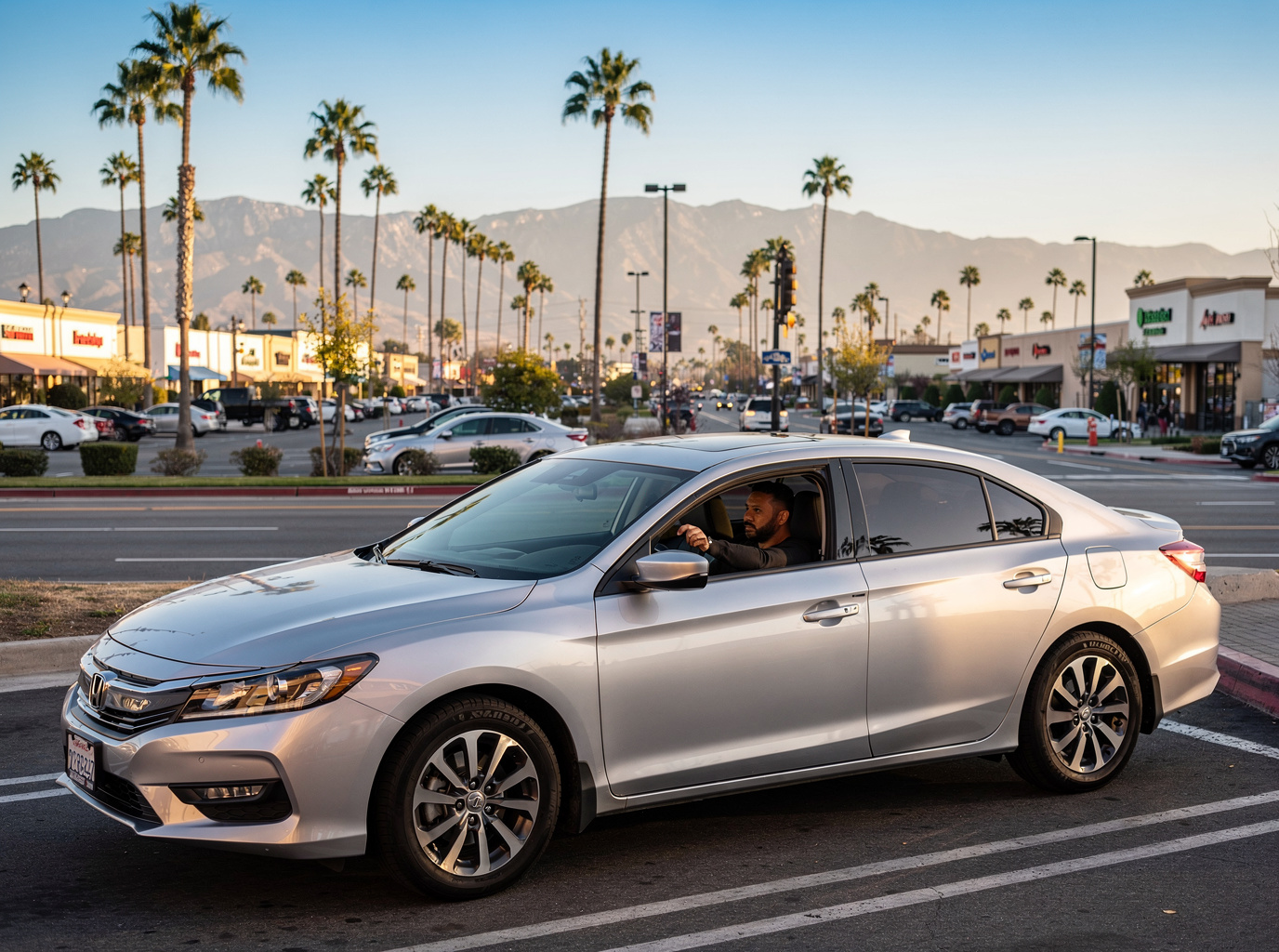
California window tint laws require front side windows to transmit at least 70 percent visible light while the windshield must remain clear below the AS-1 line. Rear side windows and the rear window face no minimum VLT restriction provided the vehicle has both side mirrors. These standards apply uniformly across San Bernardino County, including routes through Downtown Ontario, Guasti, and Ontario Ranch.
Front Side Window and Windshield Limits
Front side windows must allow 70 percent visible light transmission measured from outside the vehicle. Any film that drops transmission below this threshold violates state code and can result in a fix-it ticket during traffic stops near Ontario Mills or Toyota Arena. The windshield permits only non-reflective tint above the factory AS-1 line; anything below that line must stay completely clear. Drivers in Creekside and North Ontario frequently request clarification on these numbers because hot-summer Mediterranean conditions make darker film tempting yet non-compliant on forward-facing glass.
Local enforcement officers use handheld meters that account for the combined glass and film value, so even factory-tinted glass plus additional film can push readings under the limit. Vehicles traveling between Ontario International Airport and Rancho Cucamonga face the same measurement standards as those parked in Armstrong. Reflective or mirrored films are prohibited on any window because they create glare that endangers other drivers on I-10 and I-15 corridors.
Rear Window Rules and Mirror Requirements
Rear side windows and the rear window may use any darkness level once the vehicle retains both left and right side mirrors. This allowance benefits drivers in Fontana and Upland who carry cargo or prefer maximum heat rejection during 100-plus-degree summer days. If the rear window film blocks the view, side mirrors become mandatory equipment; officers routinely check this detail during stops along Euclid Avenue. Ceramic films that reject infrared without reducing visible light help maintain compliance while addressing the region's intense solar load.
Many Ontario Ranch residents choose rear-only applications to stay within the 70 percent front-side rule yet still cut cabin temperatures. The law does not restrict darkness on these surfaces, but the film must not display any red, amber, or reflective coloring that could be mistaken for emergency lights. Proper installation ensures the edges remain clean so meters read only the intended transmission value.
Practical Compliance for Inland Empire Drivers
Drivers can verify compliance before traveling through San Bernardino County by having film measured at a shop equipped with calibrated light meters. Automotive window tinting professionals in Ontario routinely test completed jobs to confirm readings meet the 70 percent front-side standard. Seasonal heat in the Inland Empire increases demand for compliant ceramic options that block heat without sacrificing legality on forward glass.
Reviewing how summer heat interacts with window film helps residents understand why many choose legal rear applications while keeping front sides at or above the required transmission level. Vehicles registered in Upland or Montclair receive the same enforcement as those in Jurupa Valley, so consistent compliance avoids repeated stops. Checking film transmission before registration renewal prevents last-minute corrections.
Local drivers who need to adjust existing film often start by confirming current readings on all windows. Ontario service details outline how mobile technicians measure and adjust tint while parked at homes near Cucamonga-Guasti Regional Park or the Museum of History and Art. Staying within state limits protects both safety and convenience across the entire Inland Empire corridor.